Maintenance knowledge is spread across manuals, folders and experienced staff.
Industry focus / Manufacturing
Intelligent processes for manufacturing businesses.
We connect established system landscapes with secure automation, custom software and controllable AI employees.
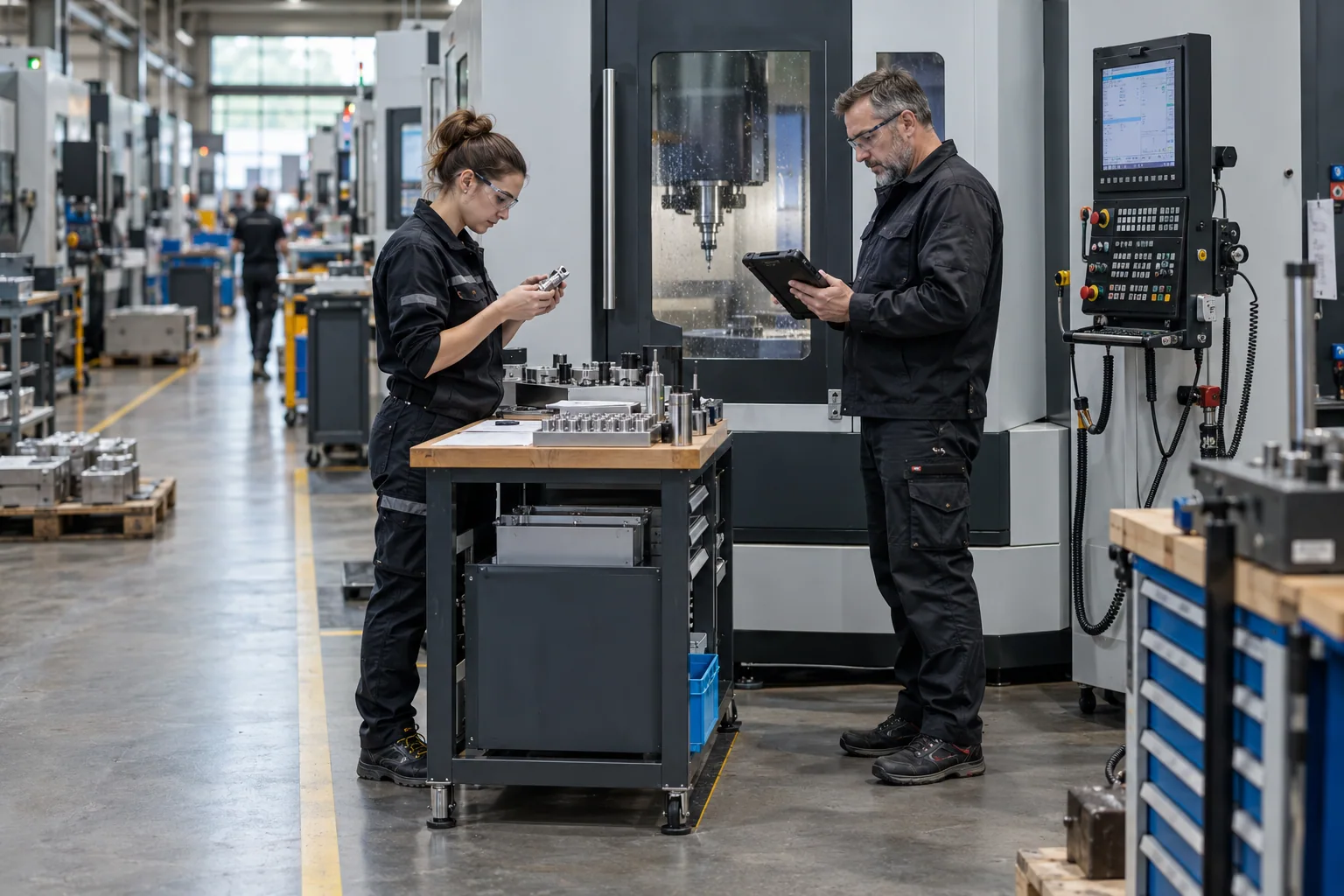 Illustrative image · AI-assisted
Who we work for
For production managers, maintenance, technical service and IT leaders in midsize manufacturing businesses.
Knowledge assistance for technical teams
Knowledge in context
Everyday work in your industry
When production, knowledge and IT fall out of step.
Machinery runs for many years. Applications, spreadsheets and custom interfaces grow alongside it. Knowledge of faults and exceptions is often held by individuals. We start with a defined workflow, considering availability, protection needs and the existing production environment.
- Maintenance knowledge is spread across manuals, folders and experienced staff.
- Inspections and shift handovers are documented more than once.
- ERP, service and older applications exchange only some data.
- Changes must be coordinated with production, IT and maintenance.
Knowledge in context
Approved information becomes findable by equipment, component or service case. Sources and versions remain visible.
Traceable handovers
Inspections, open issues and responsibilities share a connection to the operational case.
Controlled modernization
Critical workflows are described before changes, checked with comparison cases and transitioned gradually.
What we contributeAppropriate technology.
Appropriate technology.
For your daily work.
We tailor these building blocks to your daily work.
Knowledge assistance for technical teams
We make suitable manuals, maintenance instructions and internal knowledge accessible. Roles and approvals determine what an AI employee may use.
Digitize inspections and handovers
Together, we structure checklists, deviations and evidence. Open measures receive owners and a visible status.
Connect ERP and specialist applications
We clarify leading data sources and suitable interfaces. Transfer errors and business exceptions become visible rather than passing unnoticed.
Consider operations and protection needs
Network boundaries, maintenance windows, access and recovery belong in planning. Machine control changes require separate technical and domain assessment.
Concrete industry use casesWhat this could look like
What this could look like
in your business.
The following scenarios describe possible projects. They are illustrative examples, not documented customer references.
From fault symptoms to the right knowledge source.
The starting point
Equipment reports recurring errors. Technicians search different PDF manuals and old service reports; the precise equipment version matters.
A possible approach
An internal assistant could filter by equipment and version, assemble relevant passages and find previously approved measures. Missing or conflicting information would be explicitly flagged.
Possible outcome
Prepared information with sources for the responsible on-site specialist to assess. Recurring questions can then inform a maintained knowledge base.
Open issues stay linked to the equipment.
The starting point
The early shift records a deviation on paper, a photo enters a chat and the next shift learns about it only at the next fault.
A possible approach
A digital handover could connect equipment, checklist, photo and measure. An AI employee could prepare a summary; responsible staff confirm content and priority.
Possible outcome
A traceable handover with open measures, responsibilities and linked evidence rather than scattered reports.
Gradually replace an established application.
The starting point
An older application supports materials and service processes. Documentation is missing and its data is manually transferred to ERP.
A possible approach
Business logic, inputs and exceptions would first be recorded. A limited process could be recreated with comparison data and a suitable ERP interface tested.
Possible outcome
An assessable basis for migration and replacement, with documented deviations and an agreed fallback.
People, knowledge and systems
An example: from equipment knowledge to a reviewed measure.
A clear information flow shows where technology helps and where professional responsibility is required.
- 01
Identify equipment
Version, documents and operational context.
- 02
Prepare knowledge
Approved sources with references.
- 03
Expert assessment
Technical responsibility stays with people.
- 04
Document the case
Measure, result and open issues.
Integrate openly. All NALVRA products support MCP. The Model Context Protocol enables standardized connections to compatible AI assistants. Specific interfaces and permissions determine accessible data and actions.
Human First. AI Empowered.From industry workflow to projectA manageable starting point.
A manageable starting point.
A clear path.
We start with a defined use case. Each phase provides a verifiable basis for the next decision.
- 01
Understand the workflow on site
We review a specific maintenance, inspection or handover process with the teams involved.
Possible deliverableProcess map, system overview and critical exceptions. - 02
Define the pilot
Equipment, data, permissions and acceptance criteria are defined for a limited start.
Possible deliverablePilot scope with approvals and protection needs. - 03
Test within safe boundaries
Representative test cases assess information quality, interfaces and error handling.
Possible deliverableDocumented checks and expert feedback. - 04
Introduce with control
Training, operational responsibility and rollout are coordinated with domain owners.
Possible deliverableRollout plan, documentation and fallback.
Your first step
One process. One machine. A testable start.
Bring a recurring bottleneck: difficult troubleshooting, unclear shift handover or manual data transfer. Together, we assess whether knowledge, integration or modernization offers the greatest opportunity.
Discuss an industry projectRelevant expertiseThe right components
The right components
for your project.
Explore the services relevant to the tasks described.
01
AI Employees & Integration
Digital employees tailored to your workflows and interfaces.
02Information Security & Compliance
Reduce security risks systematically and turn requirements into practical measures.
03Legacy Modernization
Understand business-critical legacy software and modernize it with control.
Software when it fits the need
Tools for your workflows.
Our MCP-enabled products can complement implementation. Features, version and interfaces are assessed for your project; suitable existing applications remain part of the assessment.
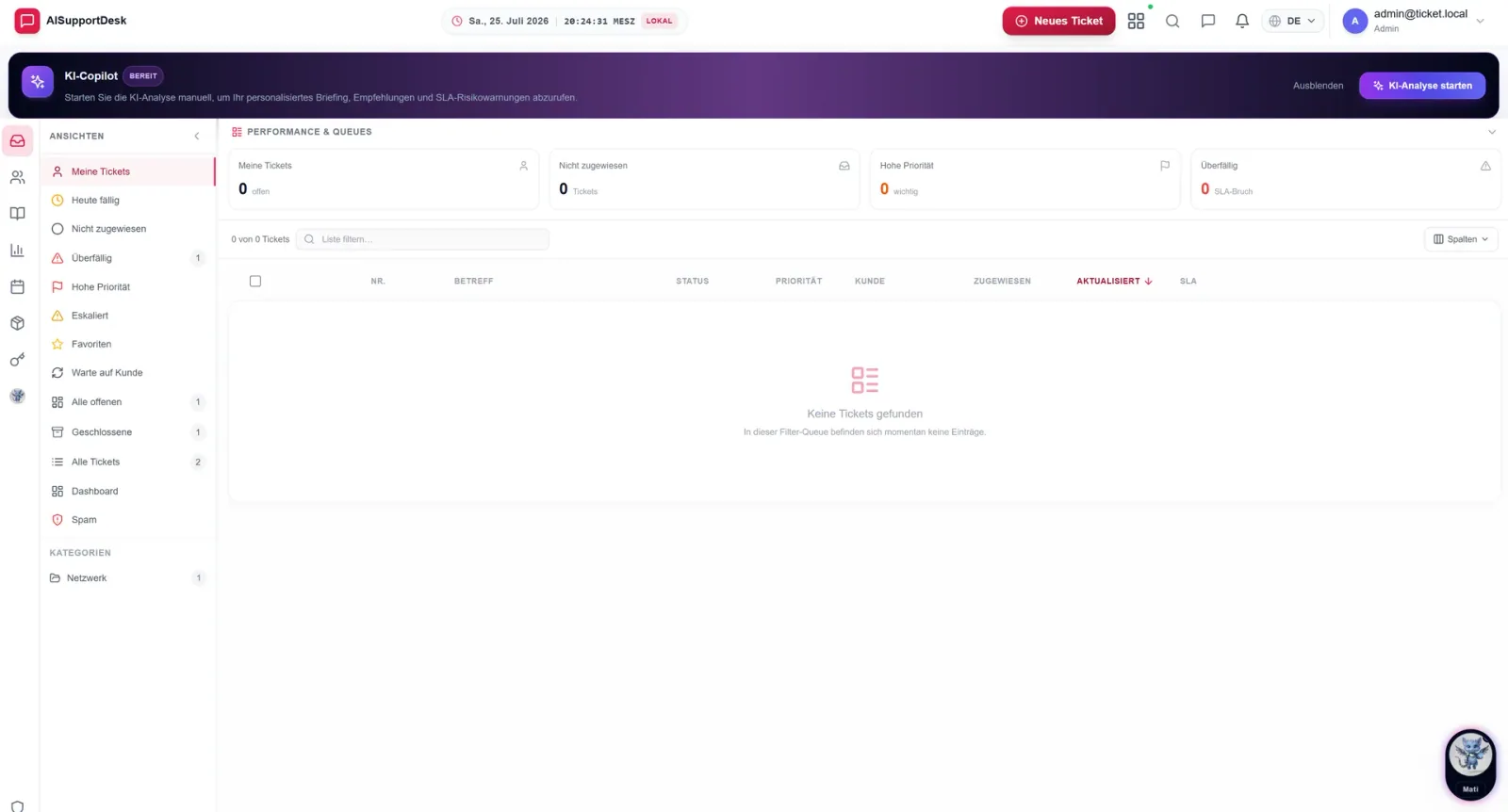 On request
Business & OperationsMCP-enabled
NALVRA SERVICE
Service and support platform for tickets, knowledge and technical resources.
View product External website · new tabIndustry & TradeMCP-enabled
NALVRA OPS FLOW
Connected inspections, handovers and operational documentation.
View product External website · new tabQuestions from your industryBefore you start,
Before you start,
useful to know.
Does AI directly operate machinery or controls?
The examples focus on knowledge, documentation and preparation. Control-system interventions are not a generally promised component and require separate assessment and approval.
Can existing ERP and older systems be connected?
We assess available APIs, exports, data quality and access rights. Useful integrations can only be determined from the specific systems and versions.
Is operation without a public cloud possible?
On-premises, private cloud and hybrid models may be suitable depending on technology, protection needs and operating arrangements. Architecture is defined for the specific use case.
Your project. Our next conversation.
What matters to your business?
Let's discuss a specific workflow, your technical prerequisites and a sensible first step.