Support requests reach different contacts.
Solutions / 05 / Managed Helpdesk & AI Support
Reduce IT support workload. Maintain service quality.
Clear intake channels, accessible knowledge and defined escalations, complemented by agreed operations for your AI agents.
NALVRA helps businesses operate an external helpdesk. AI can structure requests, make knowledge accessible and prepare processing steps. People remain responsible for escalations and critical measures.

Who we work for
For businesses with limited internal support capacity and IT or service managers looking to outsource selected tasks with clear responsibilities.
Intake & qualification
Defined proposal for helpdesk and, where appropriate, Managed AI
Your starting point
When support needs clear ownership.
We align service processes, channels, responsibilities and handovers with your organization. Scope is explicitly agreed, including availability, prioritization and escalation paths. Managed AI Services can complement agreed operations for agents and integrations.
- Support requests reach different contacts.
- Knowledge and case statuses are hard to find.
- Internal teams need support and structured handovers.
Organized intake
Requests are recorded, qualified and assigned to an accountable workflow. Questions and progress stay with the case.
Knowledge within the workflow
Approved instructions and known solutions support processing. AI can prepare relevant information; people assess whether it applies.
Accountable operations
Contacts, handovers, change rules and escalations are defined for the helpdesk and agreed AI services. Outstanding tasks become visible.
What we contribute
A helpdesk that fits your workflows.
We tailor these building blocks to your project.
Intake & qualification
We agree intake channels and required information. Impact, affected systems and urgency inform prioritization.
Ticket handling within the agreed scope
Supported applications, permitted activities and handovers to internal teams or vendors are defined. Work is documented in the ticket, including questions and closure.
AI-assisted knowledge support
An assistant can search approved knowledge, find similar cases and prepare draft responses. Sources and versions help staff review suggestions.
Human escalation management
Critical measures have a named decision-maker. Technical and organizational escalation paths define who takes over when permissions are missing, incidents occur or impact is unclear.
Reporting & service improvement
Together, we examine recurring requests, open cases and handover gaps. This identifies knowledge gaps, useful automation and practical process improvements.
Managed AI: monitoring, updates & recovery
For agreed agents and integrations, we define monitoring, incident handling, access reviews and update procedures. Model changes, costs, backups and recovery are included in the relevant operating concept.
Concrete use casesWhat this could look like
What this could look like
in practice.
Illustrative project scenarios show possible approaches. They are not documented customer references.
Resolve recurring requests transparently.
The starting point
Staff report access and application problems by email or directly to individual IT colleagues. Key details are missing and cases are lost during handovers.
A possible approach
A helpdesk could capture details in a structured way and offer known solutions. A knowledge assistant would prepare suitable instructions for the responsible person.
Possible outcome
The aim is a documented workflow from intake to response, including handover to internal IT or a vendor.
Hand an incident to the right specialist.
The starting point
A technical service provider needs help initially assessing software issues. Specialist equipment decisions must not be assigned to the general helpdesk.
A possible approach
The intake team could record the application, error and operational impact. Approved initial checks would be documented and the case escalated with the required information.
Possible outcome
The aim is a useful handover to the responsible specialist without repeatedly requesting the same information.
Operate a knowledge agent with control.
The starting point
An internal AI agent uses company documents. Changed sources, expiring access or a model update could affect its answers and integrations.
A possible approach
Agreed operations could monitor source connections and errors, run samples with defined questions and first test updates in a suitable environment.
Possible outcome
The aim is visible incidents, documented changes and a planned rollback if an update fails agreed criteria.
A transparent service path
From request to an accountable solution.
AI can prepare information and ease routine work. The service process defines who takes the next step and when human judgment is required.
01Capture
Collect the request, affected environment and operational impact in the case.
02Assess
Determine priority, approved knowledge and suitable handling.
03Handle
Support within the agreed scope or escalate to the responsible person.
04Respond
Document the result, agree closure and update knowledge where useful.
Schematic workflow. Service hours, response targets and scope are agreed individually.
A transparent approachFrom the first conversation
From the first conversation
to a controlled outcome.
Each phase informs the next decision. Scope, responsibilities and acceptance are agreed before implementation.
- 01
Clarify service needs
We assess incoming requests, supported systems and the desired workload reduction. Tasks outside the helpdesk are also identified.
Possible deliverableService scope with channels, systems and agreed boundaries. - 02
Define responsibilities
Contacts, access and escalations are coordinated with your organization. Knowledge and procedures must be available for the tasks taken on.
Possible deliverableResponsibility matrix, access rules and escalation plan. - 03
Take over with control
Transition follows the agreed scope with verifiable handovers. Typical requests and critical exceptions are rehearsed together.
Possible deliverableAgreed work instructions and documented operational handover. - 04
Improve operations
We evaluate agreed service information, update knowledge and suggest improvements. Changes receive clear approvals.
Possible deliverableService analysis and prioritized improvements.

Your starting point
Helpdesk and operations review
We review current requests, teams involved and existing operational documentation. We clarify which tasks can be handed over and which prerequisites remain unmet.
- Defined proposal for helpdesk and, where appropriate, Managed AI
- Overview of required access, knowledge sources and contacts
- Proposal for transition, escalation and ongoing service evaluation
Software when it fits the need
Tools for your workflows.
Our own applications can complement delivery. Your requirements and actual interfaces are decisive; other suitable technologies are also considered.
 On request
Business & OperationsMCP-enabled
NALVRA SERVICE
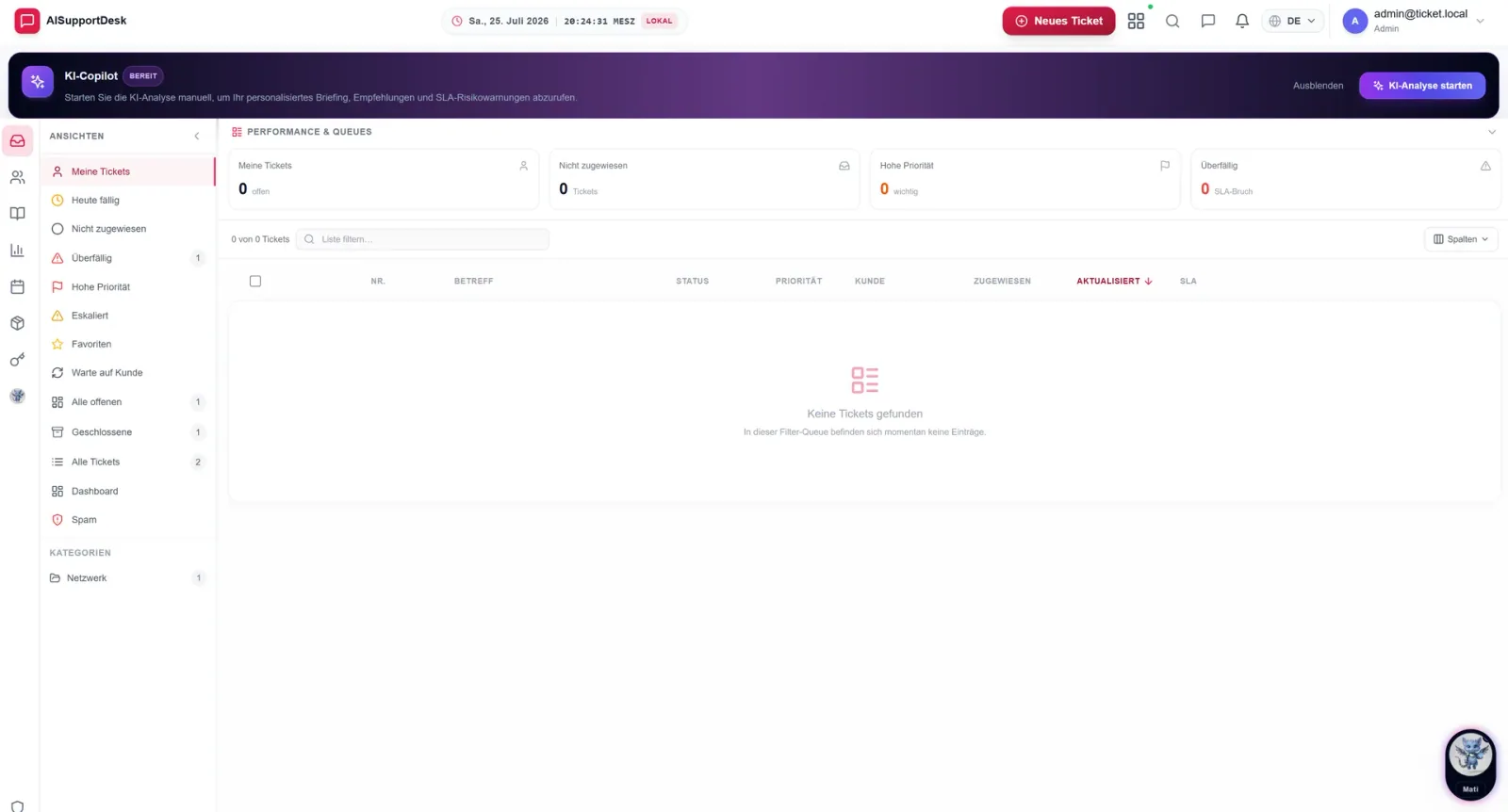
Service and support platform for tickets, knowledge and technical resources.
View product External website · new tabIndustry & TradeMCP-enabled
NALVRA OPS FLOW
Connected inspections, handovers and operational documentation.
View product External website · new tabSee the connectionsAnother perspective
Another perspective
can be worthwhile.
Questions before the first step
Useful questions. Clear answers.
What are the service hours?
Service hours and response targets are contractually agreed based on actual needs and operating arrangements.
Who decides on critical measures?
Defined human contacts approve critical actions and handle escalations.
Must we use a particular service platform?
The right platform depends on your processes and existing systems. NALVRA SERVICE can be an option; specific functions and integration scope are checked in advance.
What do Managed AI Services include?
Depending on the agreement, this may include agent infrastructure, monitoring, updates, model and interface maintenance, access reviews, cost analysis, backup and recovery. The operating concept defines the components covered.
Your project. Our next conversation.
A good next step starts with clarity.
Describe your situation. We will discuss goals, technical prerequisites and a suitable starting point.